
Deep, Rich and Enduring
Marone is the colour of wine, chestnut and old European marble: deep, rich and quietly dramatic. In natural stone it becomes a refined focal point.
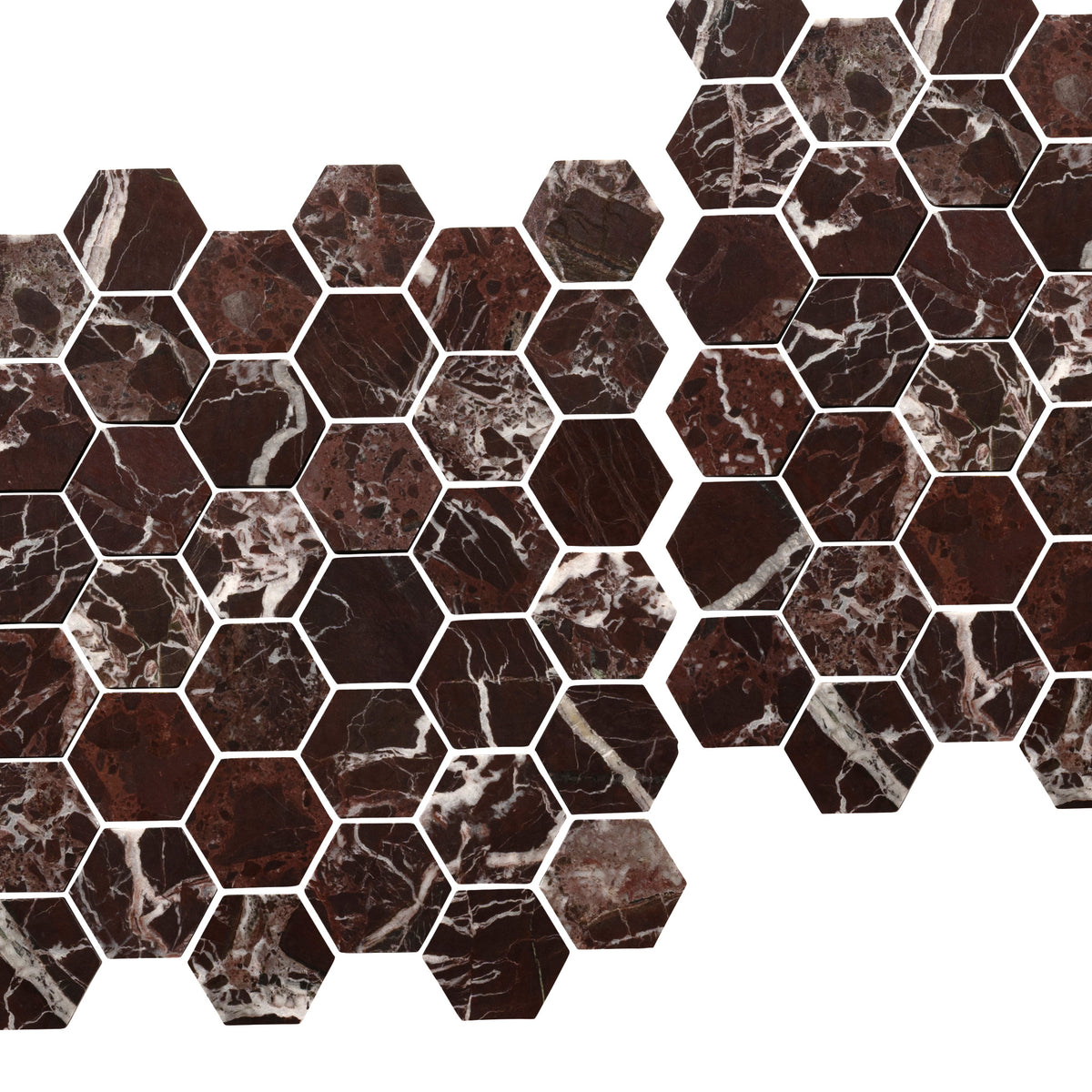
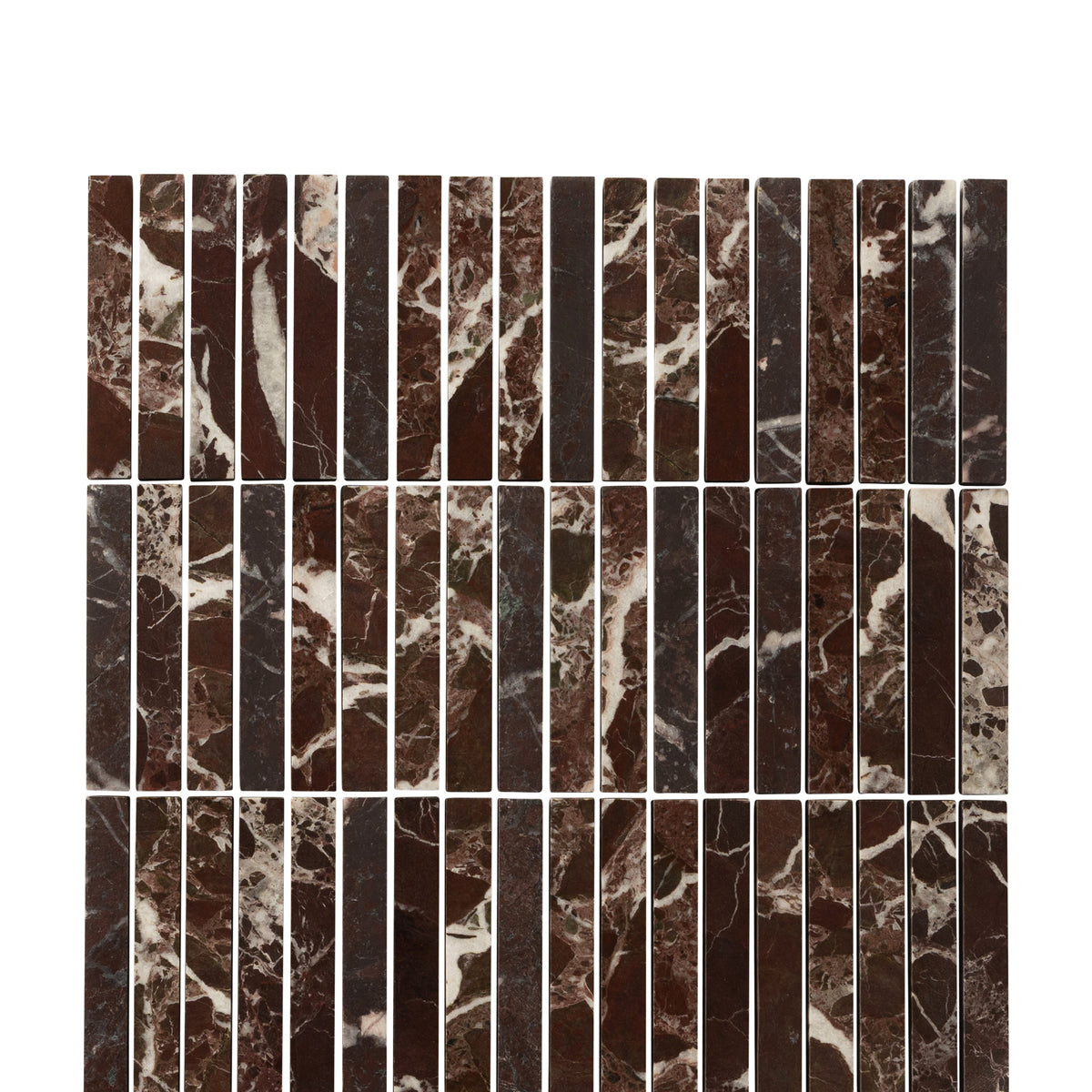
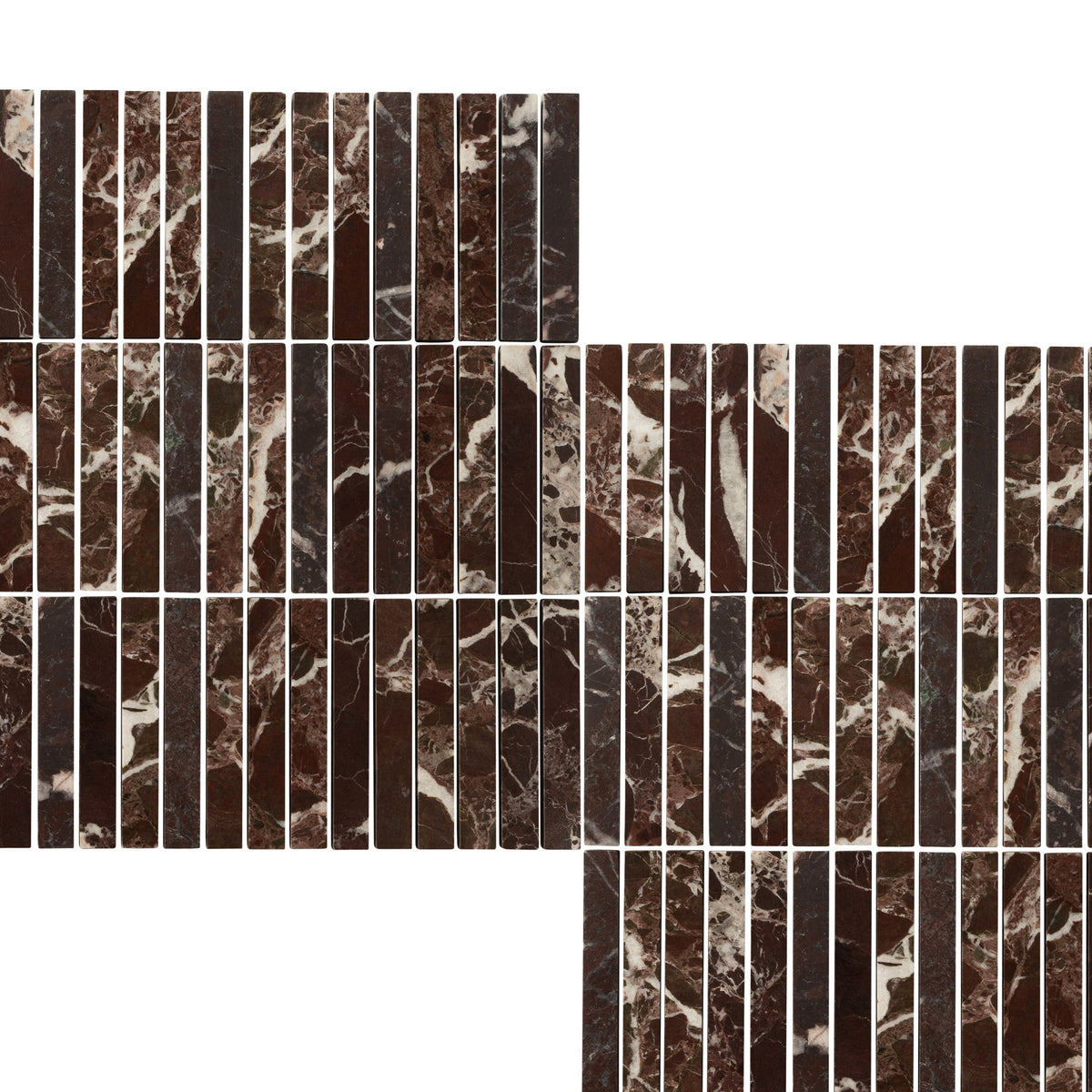
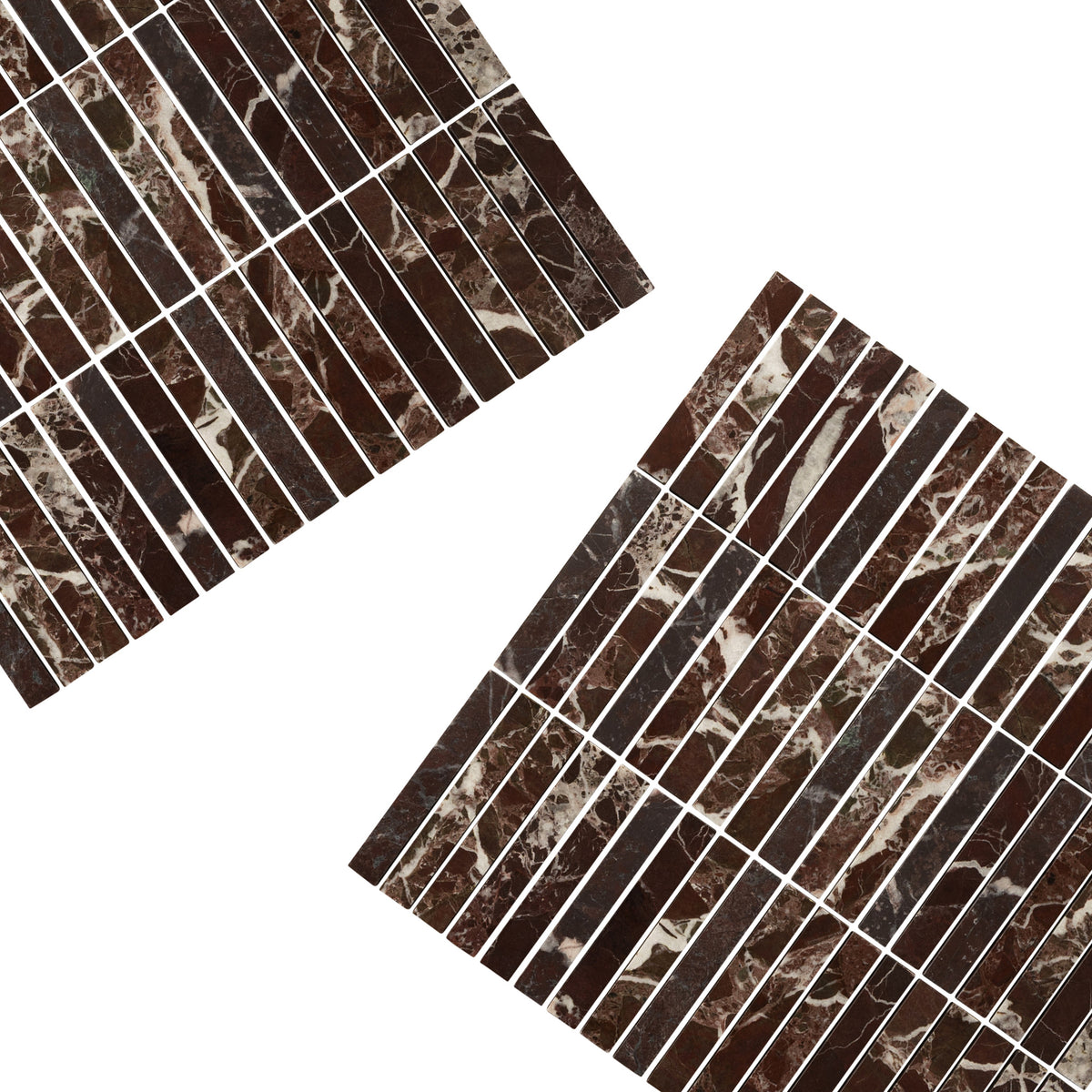
The Design Palette’s marone natural stone mosaics celebrate the deep burgundy tones of classic European marble, led by Rosso Levanto from the Ligurian coast of Italy. Its deep burgundy base, broken by fine white veining, brings depth, contrast and timeless elegance to a space.
Translated into architectural formats, KitKat, hexagon and penny round, our marone mosaics bring richness and drama to kitchen splashbacks, bathroom feature walls, powder rooms, bars and hospitality interiors. Based in Sydney and supplying projects across Australia, we work with architects, interior designers, builders and homeowners who want colour with depth and a strong


COLOUR // MARONE
ORIGIN + History
Marone takes its name from the chestnut. The colour comes from the French couleur marron, the colour of the marron, the large sweet chestnut of southern Europe. The word came from the dialect of Lyon, and its roots may reach back to a pre-Roman language, possibly Ligurian, spoken on the same coast where Rosso Levanto is quarried today.
The colour first appeared in English in 1791, spelled marone, exactly as it appears here, before later becoming maroon. In Italian, marrone still means brown. In natural stone, marone holds all of these meanings: chestnut, wine and deep red-brown, formed over millions of years.
COLOUR // MARONE
The Stones of marone
Rosso Levanto. Quarried around the seaside town of Levanto in Liguria, Italy, Rosso Levanto is a brecciated stone in which fragments of serpentine are bound by white calcite. Quarried since Roman times and traded widely from the Middle Ages, it has long been prized for fine architectural detail.
At The Design Palette, we see marone as a colour of conviction. Rosso Levanto remains beautiful for decades, gaining character over time rather than wearing out. In a design culture of constant replacement, that endurance is its own form of sustainability.